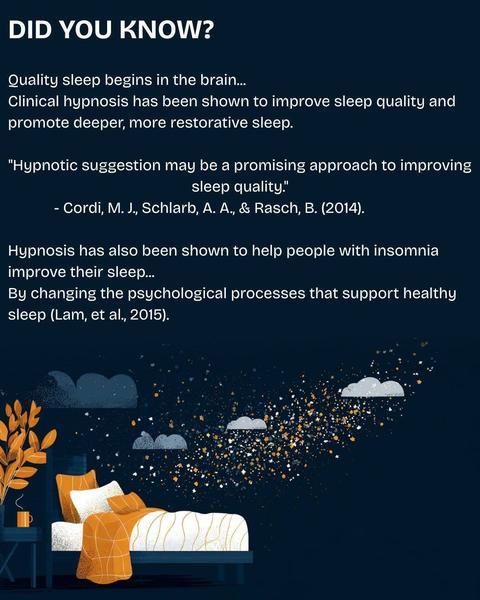
1. The harder you try to sleep... the more awake you often become.
It's one of the great psychological paradoxes.
Most people think the solution to poor sleep is to try harder. To relax more. To clear the mind. To somehow force themselves to drift off.
Unfortunately, that's often exactly what keeps the brain switched
on.
I've just published a new article exploring how to use self-hypnosis for sleep in ways that are grounded in psychology, neuroscience and behavioural sleep science.
Inside the article you'll discover:
• Why "trying to sleep" often backfires.
• Practical self-hypnosis techniques to help you fall asleep naturally.
• What to do if you wake during the night.
• How to improve the quality of your sleep rather than simply chasing more
hours.
• Why daytime self-hypnosis may be just as important as what you do at bedtime.
There are no gimmicks, no mystical claims and no miracle cures—just practical, evidence-informed psychological skills that many people can begin using tonight.
If better sleep is something you've been searching for, I hope you'll enjoy reading it.
Read the full article here: Self-Hypnosis for Sleep: Evidence-Based Ways to Improve Sleep Naturally.
2. Many people think poor sleep begins when they get into bed.
I don’t.
In this video I explain one of my favourite evidence-based self-hypnosis techniques that helps prepare the brain for healthy sleep before your head even reaches the
pillow.
It’s called creating a Psychological Landing Strip, and it’s a simple exercise that can help reduce mental overactivity and encourage the conditions in which sleep naturally arrives.
Watch Video Here: Can’t Sleep? Try This Psychological Trick Before Bed (Backed by
Science).
3. The harder many people try to relax before bed, the more alert they become.
In this video I explain one of my favourite self-hypnosis techniques—the hypnotic body scan—which helps you work with your mind instead of against it.
It’s simple, evidence-informed and something you can try tonight.
Watch Video Here: Stop Trying to Relax Before Bed (Do This Instead).
4. You’ve probably been told to “take a deep breath” before going to sleep.
But that isn’t always the most helpful advice.
In this video I explain a simple self-hypnosis breathing technique that helps reduce unnecessary mental effort and prepares
your brain for healthy sleep.
Watch Video Here: Stop Taking Deep Breaths Before Bed (Do This Instead).
5. Did you know you can create a simple psychological cue that helps prepare your brain for sleep?
In this video I explain
how self-hypnosis uses learning and conditioning principles to strengthen healthy bedtime habits.
Simple.
Practical.
Evidence-informed.
Watch Video Here: Can You Train Your Brain To Sleep Better? (Yes… Here’s How).
6. If you’ve ever found
yourself lying awake wishing your brain would simply “switch off”, this video is for you.
In this evidence-based guide, I take you through a complete self-hypnosis bedtime routine that draws upon psychological science, behavioural sleep medicine and clinical hypnosis.
You’ll learn:
• Why trying harder to sleep often backfires.
• How to create a psychological landing strip before bed.
• A calming hypnotic breathing technique.
• How to use a body scan without forcing
relaxation.
• A simple hypnotic sleep cue.
• What to do if you wake during the night.
No gimmicks.
No mystical claims.
Just practical psychological techniques that you can begin using tonight.
Watch Video Here: The Complete Self-Hypnosis Bedtime Routine (Evidence-Based Sleep
Psychology).